Adriene: Hi I'm Adriene Hill, welcome back
to Crash Course Economics.
艾德里安:嗨,我是艾德里安・希爾,歡迎回到
00:03
As you may remember from our first video, economics can be divided
into two parts: microeconomics and macroeconomics.
正如你可能從我們的第一支影片中記得的那樣,經濟學可以分為
00:10
Since macroeconomics is the one that's most
often in the news, that's where we're gonna start.
由於總體經濟學是最常在新聞中出現的
00:14
We'll get to microeconomics, which
is also super important in future episodes, but what is macroeconomics again?
我們之後會講到個體經濟學,這在
00:21
Mr. Clifford: (monotone) It's the study of
economic aggregates revealed through national income accounting, which is then- Adriene: Okay okay, when you explain it like
that it sounds boring but it is not boring!
克里福德老師:(單調地)它是透過國民所得會計揭示的
00:31
Macro is about booms and busts, will you get a job
when you graduate, should the government cut taxes?
總體經濟學關於繁榮與蕭條,你畢業後
00:37
Mr. Clifford: In theory, lowering marginal
tax rates would actually increase- Adriene: No no no!
克里福德老師:理論上,降低邊際
00:41
Remember, the goal of learning
economics is to become a better decision maker, and part of that is learning how the whole economy
works.
記住,學習經濟學的目標是成為一個更好的決策者,而其中一部分就是學習整個經濟
00:49
So let's learn about the whole economy.
所以讓我們來了解整個經濟。
00:54
[Theme Music] So, macroeconomics is the study of the entire
economy.
[主題音樂] 所以,總體經濟學是對整個
01:06
Macroeconomists study the big stuff, like economic output, unemployment, inflation,
interest rates, and government policies.
總體經濟學家研究大事,如經濟產出、失業率、通貨膨脹、
01:13
Now when it comes to fields of study, macroeconomics
is a relatively new subject.
就研究領域而言,總體經濟學
01:17
It wasn't until the Great Depression in the 1930's that economists
fully appreciated the need for a systematic way to measure the overall economy, and that we might need
theories to guide policies and fix potential problems.
直到 1930 年代的大蕭條,經濟學家才完全意識到
01:30
A hundred years ago there was no comprehensive
data on economic activity, so there was no macroeconomics.
一百年前,沒有關於經濟活動的
01:36
Today, economic data is plentiful,
but that doesn't mean that economists agree about where the economy is, where it's going,
or what should be done to help.
如今,經濟數據非常豐富,
01:44
Macroeconomists make predictions based on data, theoretical models and
historical trends, but in the end they're just predictions.
總體經濟學家根據數據、理論模型和
01:51
If you ask three economists the same question,
you're likely to get three different answers, but how, you ask, can the dismal "science"
be so subjective?
如果你問三個經濟學家同一個問題,
01:59
Well, economics is not a traditional science because it is nearly impossible
to control all the different variables.
嗯,經濟學不是傳統科學,因為幾乎不可能
02:05
Like all the social sciences, economics is studying people,
and it turns out that sometimes people are unpredictable.
和所有社會科學一樣,經濟學研究的是人,
02:13
Stan Muller: I challenge all of you to a tournament
of champions in Flappy Bird!
史丹・穆勒:我挑戰你們所有人來一場
02:17
Adriene: Who saw that coming?
Adriene: 誰預料到會這樣?
02:18
That doesn't mean that economics is all guesswork.
這並不表示經濟學全是猜測。
02:21
For example, right now in early 2015, the economy of Greece is, well it's not, it's
not good.
舉例來說,現在是2015年初,希臘的經濟,嗯,它不太好。
02:27
But how can we tell, and is it gonna get better?
但我們要如何判斷?情況會好轉嗎?
02:30
Is it gonna get worse?
還是會惡化?
02:31
What should
be done about it?
應該怎麼應對?
02:33
These are all questions that macroeconomists
try to answer, but for this video, we're gonna focus on the question "How can we tell?" Mr.
Clifford: Well in general, policy makers
have three economic goals: they want to keep the economy growing over time, they want to
limit unemployment, and they want to keep prices stable.
Now for the most part when
these three things happen, the citizens are happy, politicians get reelected, and economists
get raises.
當這三件事大部分時候都發生時,公民就會感到滿意,政治人物會獲得連任,經濟學家也能加薪。
02:51
There are three specific measurements that
economists analyze to see if a country is achieving each goal.
經濟學家會分析三個具體的指標,來觀察一個國家是否達成了每個目標。
02:55
They're the Gross Domestic
Product, unemployment rate, and the inflation rate.
它們分別是國內生產總值(GDP)、失業率和通膨率。
02:59
The most important measure of an economy is
Gross Domestic Product or GDP.
衡量經濟最重要的指標是國內生產總值,簡稱 GDP。
03:03
GDP is the value of all final goods and services
produced within a country's border in a specific period of time, usually a year.
GDP 指的是一個國家境內,在特定時間內(通常是一年)所生產的所有最終商品和服務的總價值。
03:08
Now there are some details worth mentioning.
這裡有一些值得一提的細節。
03:10
GDP doesn't include every transaction that's in the economy.
GDP 並不包含經濟中的每一筆交易。
03:12
For example, if you buy a
used domestic car, it doesn't count towards GDP because nothing new was produced.
舉例來說,如果你買了一輛中古國產車,這不計入 GDP,因為沒有生產新的東西。
03:16
Now
that same logic applies to buying financial assets like stocks, or when one company buys
another company, for example when Google bought YouTube.
同樣的邏輯也適用於購買金融資產(如股票),或當一家公司收購另一家公司時,例如 Google 收購 YouTube。
03:23
Those don't count towards GDP because
no new good or service was produced.
這些都不計入 GDP,因為沒有生產新的商品或服務。
03:27
Also, GDP often doesn't include illegal activity,
since drug dealers don't usually report their sales to the government, or non-traditional
economic activity like household production.
For example, if a plumber charges someone
$100 to fix their hot water heater, that counts towards GDP, when he fixes his own water heater,
that doesn't count towards GDP.
Notice that GDP is measured in dollars, not in the raw number of things produced.
請注意,GDP 是以美元衡量,而不是以生產的原始數量計算。
03:48
If we
analyzed just the raw number, then a country that produced five million thumbtacks would
look like they're doing just as well as a country that produced five million cars, but
there's also a problem with using the dollar
If two countries produce the same amount of
cars, but one has higher prices, then that country's going to have a higher nominal GDP,
or GDP not adjusted for inflation.
In fact, starting in 2008, Greece
has had six years of decreasing GDP, and the data reveals that this recession is just as
deep and prolonged as the Great Depression
事實上,從 2008 年開始,希臘經歷了長達六年的 GDP 衰退,數據顯示這場衰退與 1930 年代美國的大蕭條一樣嚴重且漫長。
04:51
in the United States in the 1930's.
(指 1930 年代美國的大蕭條)。
04:53
Now, I just used the term recession, which
a lot of people use incorrectly.
現在,我剛用了「衰退」(recession)這個詞,很多人對此用法不正確。
04:57
A recession is not just when the economy's bad, officially
it's when two successive quarters or six months show a decrease in Real GDP.
衰退不僅僅是經濟不好,官方定義是連續兩個季度或六個月的實質 GDP 呈現下降。
05:05
Even though the
economy in Greece is still struggling, it climbed out of its recession in 2014, experiencing
a slight increase in GDP.
儘管希臘經濟仍在掙扎,但它在 2014 年爬出了衰退,經歷了 GDP 的微幅增長。
05:15
A depression, on the other hand, doesn't have
a technical definition, but it's a severe recession, when the economy's really really
bad.
It's worth noting though that GDP can be a little problematic.
值得注意的是,GDP 可能有些問題。
05:25
I mean not all countries
measure GDP in the same way, and in recent years some European Union countries have started
experimenting with counting underground markets, like the sex trade and drug trade as part
of the total.
According to Robert Froyen, during the Great Depression, economic decisions were made "on
the basis of such sketchy data as stock price indices, freight car loadings, and incomplete
indices of industrial production.
根據 Robert Froyen 的說法,在大蕭條時期,經濟決策是「基於股票價格指數、貨車裝載量以及不完整的工業生產指數等粗略數據」做出的。
05:50
The fact was that comprehensive measures of national
income and output did not exist at the time.
事實是,當時並不存在全面的國民收入與產出衡量指標。
05:55
The depression, and with it the growing role
of government in the economy, emphasized the need for such measures and led to the development
of a comprehensive set of national income accounts." So GDP was invented to account for national
income, and it may not necessarily provide
a complete picture of a country's economy,
but for the moment it's what we've got.
一個國家經濟的全貌,但目前這是我們所擁有的工具。
06:15
So that's economic growth, or at least one
way to look at economic growth.
以上是有關經濟成長的說明,或者說是看待經濟成長的一種方式。
06:18
now, for the next big issue for macroeconomists: unemployment.
現在,宏觀經濟學家的下一個重大議題是:失業。
06:22
Anyway, the major goal of unemployment policy is to limit unemployment, and that's measured
by - you guessed it - the unemployment rate.
總之,失業政策的主要目標是限制失業,而這是以——你猜對了——失業率來衡量的。
06:30
In Greece, unemployment is over 25%.
在希臘,失業率超過 25%。
06:33
Mr Clifford: The unemployment rate is calculated
by taking the number of people that are unemployed and dividing by the number of people in the
labor force, times 100.
Clifford 先生:失業率的計算方式是將失業人數除以勞動力總人數,再乘以 100。
06:40
Now this percentage represents the number of people that are actively
looking for a job but just can't find one.
這個百分比代表的是正在積極尋找工作但找不到工作的人數。
06:44
First, the labor force only includes people
that are of legal working age and working or actively looking for work, so little kids
don't count and neither do people who aren't able to work or who just choose not to work.
So what about someone who's been looking for a job but just gives up?
那麼,對於一直在找工作但最終放棄的人呢?
06:57
Well, they're no
longer part of the labor force, and they're no longer considered unemployed.
嗯,他們不再是勞動力的一部分,也不再被視為失業者。
07:01
These are
called discouraged workers.
這些人被稱為氣餒工人。
07:02
The unemployment rate also doesn't take into
account people that are underemployed.
失業率也沒有將就業不足的人納入考量。
07:06
A worker with a five hour a week part time job is considered
fully employed even if they're looking for a better job.
每週工作五小時的兼職工人,即使他們正在尋找更好的工作,也被視為完全就業。
07:10
In both of these cases, the official unemployment
rate underestimates the problems in the labor market.
在這兩種情況下,官方的失業率都低估了勞動市場的問題。
07:15
A common misconception is that the goal is
to have 0% unemployment, but it turns out there's types of unemployment that'll exist even
when the economy's going strong.
Economists would point out that there's three types of unemployment,
or three reasons why people would be unemployed.
經濟學家會指出,失業有三種類型,或者說人們失業有三個原因。
07:28
First is frictional unemployment.
第一是摩擦性失業。
07:29
This is
when people are temporarily unemployed or between jobs.
這是人們暫時失業或處於工作轉換期間的狀態。
07:32
So if you quit your job and
look for a new one, or if you're just entering the labor force, then you're frictionally
unemployed.
所以如果你辭職去找新工作,或者你剛進入勞動力市場,那麼你就是摩擦性失業。
07:36
The second is called structural unemployment.
第二種叫做結構性失業。
07:38
Workers are out of work because there's no demand for that specific type of labor.
工人失業是因為對該特定類型勞動力沒有需求。
07:42
This
would be like a VCR repair person, but it also includes technological unemployment,
where workers are replaced by machines.
這就像是錄影帶維修人員,但也包括技術性失業,即工人被機器取代。
07:47
Now both frictional and structural unemployment
will always exist; the goal is not to have 0% unemployment.
摩擦性失業和結構性失業將永遠存在;目標不是要達到 0% 的失業率。
07:51
I mean, 0% is not even possible.
我的意思是,0% 甚至是不可能的。
07:53
We're always going to have people between jobs or people fired because machines do it
better.
我們永遠會有人處於工作轉換期,或有人因為機器做得更好而被解僱。
07:56
So the goal is to have no cyclical unemployment.
所以目標是消除週期性失業。
07:58
This is unemployment due to a recession.
這是因經濟衰退而導致的失業。
08:00
It's when people stop buying stuff, so businesses
lay off their workers and since workers have lower incomes, they stop buying stuff which
means more people lose their jobs.
當人們停止消費時,企業就會裁員;由於工人收入降低,他們也停止消費,這意味著更多人失去工作。
08:07
An economy is considered to be at full employment
when there's only frictional and structural unemployment.
當經濟中只有摩擦性失業和結構性失業時,就被視為處於充分就業狀態。
08:11
This is called the natural rate
of unemployment.
這被稱為自然失業率。
08:13
This natural rate differs slightly between countries, in the United States
it's usually between 4 to 6 percent unemployment.
這個自然失業率在各國略有不同,在美國通常介於 4% 到 6% 之間。
08:18
Now as you might expect the GDP growth rate
and the unemployment rate are inversely related.
如你所預期,GDP 成長率與失業率呈反向關係。
08:22
That means that when GDP is rising, the unemployment
rate is falling, when GDP is falling, the unemployment rate is rising.
這意味著當 GDP 上升時,失業率下降;當 GDP 下降時,失業率上升。
08:27
Adriene: And that's exactly what happened
in the United States during the Great Depression.
Adriene:這正是美國在大蕭條時期發生的情況。
08:31
in the 1930's, droughts, bank failures, and
counterproductive policies caused GDP to fall, and unemployment peaked at 25 percent.
在 1930 年代,乾旱、銀行倒閉和適得其反的政策導致 GDP 下滑,失業率達到 25% 的頂峰。
08:39
Let's move on to the third economic goal:
stable prices.
我們接著來看第三個經濟目標:物價穩定。
08:42
While I might like the idea of the stuff I buy getting cheaper across
the board, falling prices are not really a good thing.
雖然我可能喜歡我買的東西全面降價的想法,但物價下跌並不是一件好事。
08:49
Average prices in Greece have
fallen about two percent recently, and during the 1930's, the inflation rate in the US was
negative ten percent, but how can cheaper stuff be bad for the economy?
Mr. Clifford: Well the goal is to keep prices
stable, mainly to avoid rapid inflation, or rising prices, but we also want to avoid excessive
deflation which is falling prices.
Inflation is measured by tracking the prices of a set
amount of commonly purchased items, or what economists call a market basket.
通貨膨脹是透過追蹤一組固定數量的常用商品價格來衡量的,經濟學家稱之為一籃子市場商品。
09:14
The inflation rate is
the percent change in the price of that basket over time.
通貨膨脹率是指這一籃子商品的價格隨時間變動的百分比。
09:17
Too much inflation is bad because it decreases
the purchasing power of money; it means you can buy less stuff with the same amount of
money, which has all sorts of negative effects on the economy.
Deflation on the other hand, seems like it
would be a good thing but most economists see falling prices as a bad thing.
另一方面,通貨緊縮看似是件好事,但大多數經濟學家認為物價下跌是件壞事。
09:35
Falling
prices actually discourage people from spending since they might expect prices to fall more
in the future.
物價下跌實際上會打擊人們消費的意願,因為他們可能預期未來物價會跌得更多。
09:40
Less spending in the economy means GDP is gonna decrease and unemployment's
gonna increase, and that just becomes a vicious cycle.
經濟體中的支出減少意味著國內生產總值(GDP)將會下降,失業率將會上升,這就變成了一個惡性循環。
09:45
So severe recessions are often accompanied
by deflation because the demand for goods and services falls, but when the economy starts
to improve again, we often see an increase in prices.
Adriene: Throughout history, economies have
expanded and contracted.
艾德莉安:縱觀歷史,經濟一直在擴張和收縮。
09:56
It's called the business cycle.
這被稱為商業週期。
09:57
Let's go to the Thought Bubble.
讓我們進入思考泡泡。
09:59
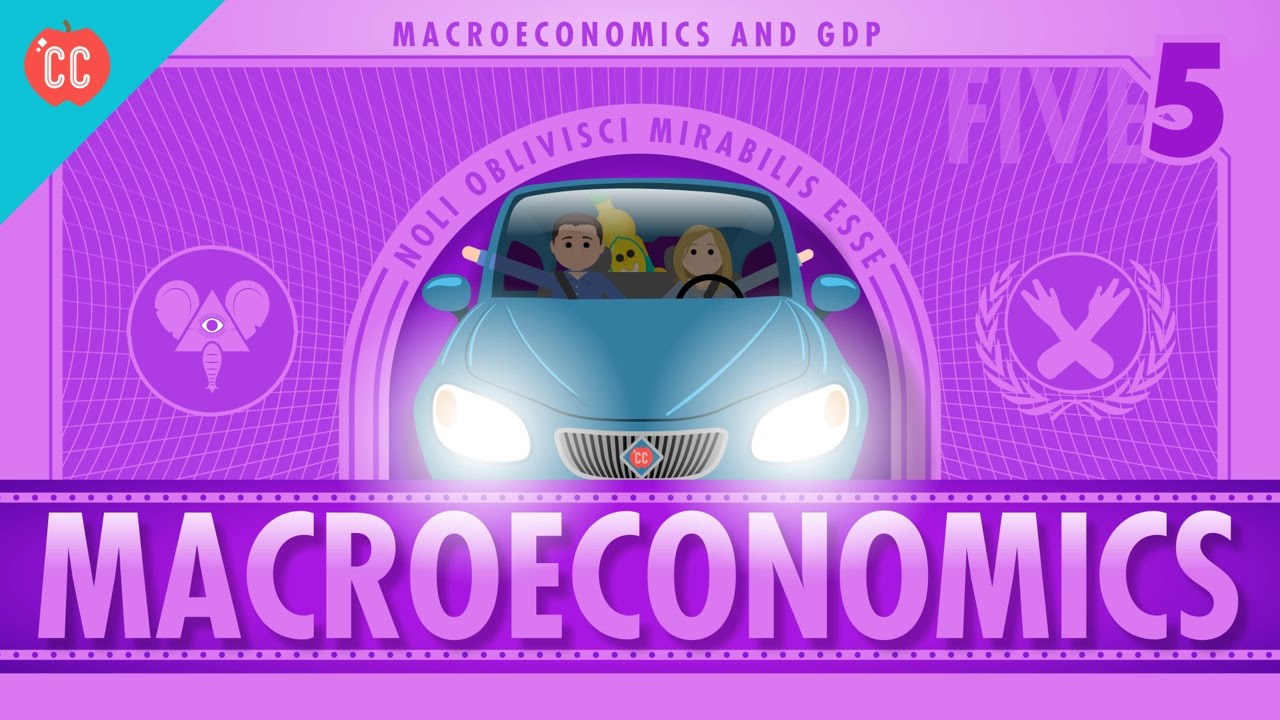
If we imagine the economy as a car, then GDP,
employment and inflation are the gauges.
如果我們把經濟想像成一輛車,那麼 GDP、就業率和通膨就是儀表板上的指標。
10:04
A car can cruise along at 65 miles per hour
without overheating.
一輛車可以以每小時 65 英里的速度平穩行駛而不會過熱。
10:07
Safe cruising speed is like full employment; unemployment is low,
prices are stable and people are happy.
安全的巡航速度就像是充分就業;失業率低,價格穩定,人們都很開心。
10:13
But if we drive that car too fast for too
long, it'll overheat, and in the economy, significant spending increases GDP causing
an expansion.
但如果我們把車開得太快太久,它就會過熱;在經濟中,大量的支出會增加 GDP,導致經濟擴張。
10:20
Unemployment falls and factories start producing at full capacity to keep up
with demand.
失業率下降,工廠開始全速運轉以滿足需求。
10:24
Since the amount of products that can be produced is limited, people start
to outbid each other, resulting in inflation.
由於可生產的產品數量有限,人們開始互相競價,導致通貨膨脹。
10:31
Eventually, production costs increase as workers
demand higher wages and the economy starts to slow down.
最終,當勞工要求更高的工資時,生產成本會增加,經濟開始放緩。
10:36
Businesses lay off a few workers,
those unemployed workers spend less causing the businesses that produce the good that they
would otherwise be buying to lay off more workers.
企業裁員,失業者支出減少,導致生產這些失業者原本會購買的商品的企業,必須裁掉更多員工。
10:46
This is a contraction, the economy is going
to slow.
這就是經濟收縮,經濟將會放緩。
10:49
Eventually things stabilize, production costs fall since resources are sitting idle,
and the economy starts to expand again.
最終情況會穩定下來,因為資源閒置,生產成本下降,經濟再次開始擴張。
10:56
This process of booms and busts is called the business
cycle.
這種繁榮與蕭條的過程,被稱為商業週期。
10:59
To understand why these fluctuations might
occur, let's take this car analogy just a little further and look at the engine.
為了理解為什麼會發生這種波動,我們把汽車的類比再延伸一點,來看看引擎。
11:06
Much
like the four cylinder engine that powers the Volkswagen of growth, an economy has four
components that make up GDP.
就像驅動福斯汽車成長的四缸引擎一樣,經濟體也有四個構成 GDP 的要素。
11:12
Each represents a different group that can purchase things
in the economy.
每個要素代表經濟體中不同的購買群體。
11:16
They're consumer spending, business spending which is called investment,
government spending, and net exports which is basically spending by other countries.
它們分別是:消費支出、企業支出(即投資)、政府支出,以及淨出口(基本上是其他國家的支出)。
11:25
If any one of these components loses power,
the economy will slow down, but not all of them are created equal.
如果其中任何一個要素失去動力,經濟就會放緩,但它們的重要性並不相同。
11:31
Most economies rely
heavily on consumer spending.
大多數經濟體高度依賴消費支出。
11:34
For example, in the US, consumers account for about 70%
of GDP, but other countries might rely more heavily on exports.
例如在美國,消費者佔了 GDP 的 70%,但有些國家可能更依賴出口。
11:42
The point is, changes in these four
components change the speed of the economy.
重點是,這四個要素的變化會改變經濟運行的速度。
11:47
Thanks Thought Bubble.
謝謝 Thought Bubble。
11:48
So when I'm driving
my car on the highway, I use cruise control to regulate my speed.
當我在高速公路上開車時,我會使用定速巡航來控制速度。
11:52
So why don't we have
cruise control for the economy?
那為什麼我們不為經濟體設置定速巡航呢?
11:54
Well many economists think that the government should
play a role in speeding up or slowing down the economy.
許多經濟學家認為,政府應該在加速或減緩經濟方面發揮作用。
11:59
For example, when there's a recession,
the government can increase spending or cut taxes so consumers have more money to spend.
例如,當經濟衰退時,政府可以增加支出或減稅,讓消費者有更多錢可以花。
12:07
Proponents of this policy argue that it would
get the economy back to full employment, but it has its drawback: debt, which some economists
hate while others argue isn't very much of a drawback at all.
We're gonna save the debate over how to fix
the economy for future videos, but for now it's important for you to have a general understanding
of how the economy works and how it's measured.
After all, whether you're driving a Namco
in Greece, a Kia in Korea or a Ford in the US, your livelihood and your future will be
shaped by what happens in the economy.
By which I mean try to
save a little once in a while, OK?
我的意思是,偶爾要試著存一點錢,好嗎?
12:45
So we've really just touched on these three
major indicators of economic health, and while they can be useful in providing a broad overview
of a nation's economy, reality is, as usual, a little more nuanced than that.
Mr. Clifford: Next week, we're gonna go under
the hood and look at the greasy, dirty details of how economists calculate growth, and tune
up thee economy, and rev up their economic engines and drive around the drag racing tr--