Here's how the narrow-minded think about stock market blowups.
以下是心胸狹窄的人對股市崩盤的看法。
00:04
Next time mortgages are made readily available to unqualified home buyers, I'll be really careful.
下次當不合資格的房屋買家輕易取得抵押貸款時,我會非常小心。
00:12
Or next time owners of internet companies without any profits try to sell me an IPO at billion dollar valuations, I'll definitely stay away.
或者下次當沒有盈利的網路公司擁有者試圖以數十億美元的估值向我推銷IPO時,我絕對會遠離。
00:22
Because of recent and ongoing events in the stock market, I thought it would be fitting to make a video about previous stock market crashes.
由於股市最近和正在發生的事件,我認為製作一個關於過去股市崩盤的影片會很合適。
00:31
We shall see that these failures have something that they can teach us, as long as we don't get bogged down in the particulars like these guys.
我們將看到這些失敗有值得我們學習的地方,只要我們不像這些人一樣陷入細節中。
00:39
Of course hindsight is always 2020, but for warned is for armed, if we're paying attention.
當然,事後諸葛亮總是容易,但有備無患,只要我們留心。
00:48
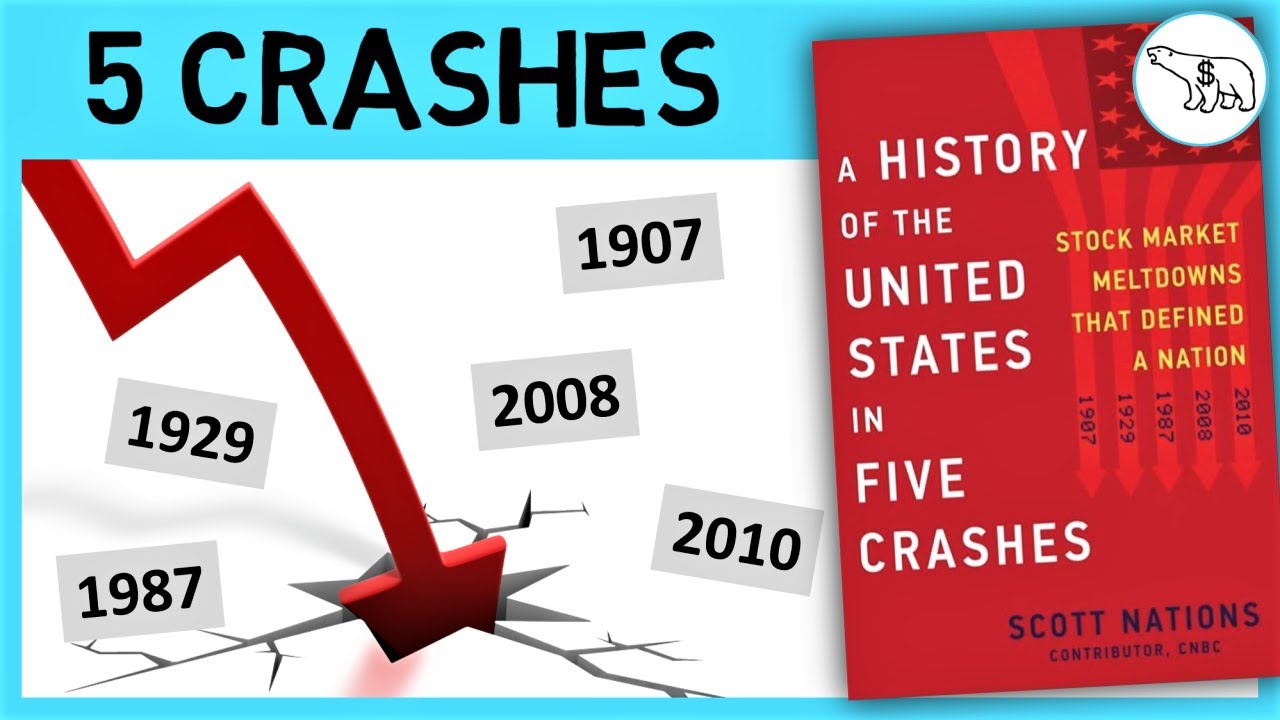
This is a summary of five of the most devastating stock market crashes in history, inspired by the book A History of the United States in five crashes, written by Sculpt nations.
And this is the Swedish investor, bringing you the best tips and tools to reach financial freedom through stock market investing.
我是瑞典投資者,為您帶來通過股市投資實現財務自由的最佳技巧和工具。
01:11
1907.
1907年。
01:13
The Panic In 1898, rules were introduced that allowed a company to own another company.
1898年,引入了允許一家公司擁有另一家公司的規則。
01:20
This created the first corporate trust, simply holding companies of many other companies.
這創造了第一個企業信託,簡單地持有許多其他公司的股份。
01:26
With this, truly large corporations were created, such as Standard Oil and Northern Securities.
由此,真正的大型企業誕生了,例如標準石油和北方證券。
01:33
And these trusts represented a large part of the total stock market in the early 1900s.
這些信託在20世紀初代表了股市總值的很大一部分。
01:41
Theodore Roosevelt, the then president, thought that these companies were like monopolies that hindered American trade.
當時的總統西奧多·羅斯福認為這些公司像是阻礙美國貿易的壟斷企業。
01:48
He thought that they were depriving the public of the advantages of free trade, so he started to go after them, taking many of them to court.
他認為它們剝奪了公眾享受自由貿易的優勢,因此開始對它們採取行動,將許多公司告上法庭。
01:58
Markets saw Roosevelt's move as very unpredictable and didn't know how far he'd go in this witch hunt.
市場認為羅斯福的行動非常不可預測,不知道他在這場「獵巫」行動中會走多遠。
02:05
As is always the case, uncertainty is the harboring of stock market crashes.
如同往常,不確定性是股市崩盤的溫床。
02:12
Meanwhile, in 1906, a great earthquake struck San Francisco.
同時,在1906年,舊金山發生了一場大地震。
02:18
More than half of the city's population of 400,000 people were left homeless as a result.
這場地震導致40萬人口中超過一半的人無家可歸。
02:24
Homeowners didn't typically have insurance against earthquakes, but they did have against fire.
房主通常沒有地震保險,但他們有火災保險。
02:30
So what did they do?
那麼他們做了什麼?
02:32
If a house was damaged by the ruptures, but spared the flames, people typically set their own homes ablaze.
如果一棟房子被地震破壞但倖免於火災,人們通常會自己放火燒掉自己的房子。
02:41
Many of the insurers were from Britain, and the Bank of England had to pay a lot of gold in insurance claims here.
許多保險公司來自英國,英國央行不得不支付大量黃金作為保險理賠。
02:48
Britain was tied to the gold standard at that time, and to restore the gold vaults, it started offering higher interest rates to borrowers.
當時英國採用金本位制,為了恢復黃金儲備,它開始向借款人提供更高的利率。
02:58
The trust companies weren't typically regulated in the same way as banks, in that they didn't have to keep as much collateral or equity on their balance sheets.
信託公司通常不像銀行那樣受到監管,因為它們不需要在資產負債表上保持那麼多抵押品或權益。
03:07
In this way, they were able to leverage deposits more to offer higher interest rates to customers, to beat those offered by the British.
這樣,它們能夠更充分地利用存款,為客戶提供更高的利率,以擊敗英國提供的利率。
03:17
So the scene was set up.
因此,舞台已經搭好。
03:20
Now, all that was necessary was a small ignition, a catalyst for the whole system to go down.
現在,只需要一個小小的導火線,一個催化劑,讓整個系統崩潰。
03:26
And in October, 1907, it got one.
1907年10月,這個導火線出現了。
03:31
It all started when there was a failed attempt of stock manipulation in a company called United Copper.
一切始於一家名為聯合銅業的公司股票操縱失敗。
03:38
As a result, the stock fell tremendously.
因此,該股票大幅下跌。
03:41
This caused banks and corporate trusts that had used the stock as collateral to fall into financial difficulties.
這導致將該股票作為抵押品的銀行和公司信託陷入財務困境。
03:47
People who had deposited their money in these companies sensed this, and immediately wanted their money back, causing numerous runs on these banks and trusts.
在這些公司存款的人們感覺到了這一點,並立即想要取回他們的錢,導致這些銀行和信託公司發生多起擠兌。
03:56
And so, the panic of 1907 was a fact.
因此,1907年的恐慌成為了事實。
04:08
The Dow Jones Industrial Average hit a low of 53 on November 15, 1907, after reaching 103 at the top on January 19, 1906.
1929, the Great Depression The Federal Reserve was founded in 1913, as a response to the 1907 panic, when JP Morgan, together with a few other bankers, had to step up as the lender of last resort to save
The government thought that they should have that responsibility instead.
政府認為他們應該承擔這個責任。
05:05
The Fed rules of the so-called discount rate, which essentially is the interest rate that banks can borrow at.
美聯儲規定了所謂的貼現率,這基本上是銀行可以借貸的利率。
05:12
In 1924, this was lowered to the then record-low level of 3%.
1924年,這一利率被降至當時創紀錄的低水平3%。
05:18
This fueled the American stock market.
這推動了美國股市的發展。
05:21
When money is cheap, stock ownership becomes easier to finance, and it also becomes relatively more attractive to bonds.
當資金便宜時,股票所有權變得更容易融資,而且相對於債券也變得更有吸引力。
05:30
It is hilarious to compare the then record-low rate of 3% to what we see today, by the way.
順便一提,將當時創紀錄的3%利率與我們今天看到的利率相比,簡直是可笑。
05:38
Meanwhile, disappointed by the low interest rates, corporations and rich individuals started to offer coal money, essentially loans issued to other investors.
同時,對低利率感到失望的企業和富裕個人開始提供「煤錢」,基本上是向其他投資者發放的貸款。
05:48
This was primarily used for stock market speculation, and it provided slightly higher interest rates than those offered by the banks.
這主要用於股市投機,並提供略高於銀行的利率。
05:59
The 1920s were referred to as the Roaring 20s, because the market truly rallied during those years.
20世紀20年代被稱為「咆哮的20年代」,因為市場在這些年裡真正繁榮。
06:06
Because of this, many investment trusts were formed, and it was easy to attract capital from individuals that had never owned a single stock before.
由於這個原因,許多投資信託公司成立,並且很容易從從未擁有過一隻股票的個人那裡吸引資本。
06:14
You can see that the speculation had gone too far when brokers started opening temporary offices at cruising ships and golf courts, in order to allow investors and speculators to place orders basically anywhere in the world.
Anyhow, these investment trusts were quite sober, but only until they started using a lot of leverage, especially coal money.
無論如何,這些投資信託公司相當穩健,但直到他們開始大量使用槓桿,特別是「煤錢」。
06:36
It was an unusual to use at least two times more borrowed capital than equity.
使用至少兩倍於自有資本的借入資本是不尋常的。
06:43
Now all that was needed was a little push, and a large investor in London called Clarence Hatree offered one.
現在,只需要一點推動力,倫敦的一位大投資者克拉倫斯·哈特里提供了這一推動力。
06:51
He was revealed to be a fraud, and to have fooled many banks into borrowing him money, using fake stock certificates as collateral.
他被揭露是一個騙子,並且騙了許多銀行借錢給他,使用假股票證書作為抵押。
06:59
Investors in both Britain and America became suspicious after this, wondering, what were their certificates worth if even banks could be fooled so easily?
英國和美國的投資者在這之後都變得懷疑,想知道如果連銀行都能這麼容易被騙,他們的證書值多少錢?
07:09
The basic soundness of the market was questioned.
市場的基本穩健性受到質疑。
07:13
Once the market started to slip, brokers had to issue margin calls to individuals and investment trusts.
一旦市場開始下滑,經紀人不得不向個人和投資信託公司發出追加保證金的通知。
07:19
Many of them were too leveraged, and couldn't put up the additional money.
其中許多人槓桿過高,無法拿出額外的錢。
07:24
The result was that the stocks were immediately liquidated, and so the Great Depression had begun.
結果是股票被立即清算,大蕭條就此開始。
07:37
The Dow Jones Industrial Average hit a low of 41 on July 1932.
道瓊斯工業平均指數在1932年7月跌至41點的低點。
07:44
This was even lower than the bottom of the panic of 1907.
這甚至比1907年恐慌的谷底還要低。
07:48
The top was at 381 on September 3, 1929, which means that the market fell almost 90% during these three years.
頂峰是在1929年9月3日的381點,這意味著在這三年內,市場下跌了近90%。
07:58
Crazy!
瘋狂!
07:59
Also, the market wouldn't return to the levels of 1929 until November 23, 1954, as much as 25 years later.
此外,市場直到1954年11月23日才回到1929年的水平,整整25年後。
08:10
Sure there was the second world war in between here, but still, this crash was absolutely insane.
當然,期間發生了第二次世界大戰,但即便如此,這次崩盤絕對是瘋狂的。
08:17
Also, note that the market rallied 29% in 1927 and 48% in 1928.
此外,請注意市場在1927年上漲了29%,在1928年上漲了48%。
08:27
1987 Black Monday Portfolio insurance was supposed to be a financial innovation that allowed investors to sit safely through market crashes, so they could later enjoy the rallies that typically follows.
A small fee was paid up front to essentially ensure your portfolio from falling below a certain level.
預先支付一小筆費用,基本上可以確保你的投資組合不會跌破某個水平。
08:48
In a smaller scale, it would have been a very successful financial innovation, but the problem was that, on a larger scale, portfolio insurance had many flawed assumptions.
One of them was that stock prices moved smoothly, another one that there would be enough liquidity for all the sell orders that were necessary to hedge against the downside.
其中一個假設是股票價格平穩波動,另一個假設是會有足夠的流動性來應對所有必要的賣單,以對沖下行風險。
09:09
But someone calculated that just a 3% drop in the market would encourage selling that was equivalent to a whole day of trading in S&P 500 futures, and this was for just one of the firms using portfolio insurance.
Leverage buyouts of companies became popularized during the 1980s, companies buying each other using a shit-ton of leverage.
在1980年代,公司的槓桿收購變得流行,公司使用大量槓桿收購彼此。
09:36
This spurred this stock market on.
這推動了股市的發展。
09:39
The trade deficit of the U.S. had mushroomed, eight times larger in 1986 than in 1981.
美國的貿易赤字急劇膨脹,1986年比1981年擴大了八倍。
09:48
As a result, the dollar was weakening.
因此,美元正在走軟。
09:51
The Fed responded by increasing interest rates.
美聯儲的回應是提高利率。
09:54
It wanted the supply of the dollar to decrease to stabilize the value of the currency.
它希望減少美元的供應,以穩定貨幣的價值。
09:59
Their higher interest rates made the stock market relatively less attractive to bonds, after the stock market had been spurred on for many, many years.
更高的利率使得股市相對於債券的吸引力減弱,在股市經過多年推動之後。
10:11
On Monday morning, October 19, 1987, the U.S. attacked Iran, firing missiles at military targets in the Persian Gulf in a retaliation attack.
1987年10月19日星期一早上,美國襲擊了伊朗,向波斯灣的軍事目標發射導彈,作為報復性攻擊。
10:22
No one could blame people for thinking that the U.S. was at war with Iran when waking up this morning.
沒有人能怪人們在今天早上醒來時認為美國正在與伊朗交戰。
10:28
The missiles would trigger an initial downturn in the stock market, which in turn would trigger portfolio insurance sales that were too great for the market to handle.
導彈將引發股市初期下跌,進而觸發組合保險銷售,其規模之大超出市場承受能力。
10:38
Sell orders activated more sell orders, which activated more sell orders, which activated even more sell orders, which activated even more, you get the point.
賣單激活更多賣單,進而激活更多賣單,再激活更多賣單,然後更多,你懂我的意思。
10:46
Black Monday was born.
黑色星期一就此誕生。
10:55
After the top of 2,722 on August 25, 1987, the bottom of 1,739 was hit on the day of Black Monday, October 19, 1987.
The Dow was down 22.6% on the day, which is the largest loss in a single day in the history of the stock market.
道瓊指數當天下跌22.6%,是股市歷史上單日最大跌幅。
11:18
The next top would be reached 2 years later, on August 24, 1989.
下一個高峰出現在兩年後,即1989年8月24日。
11:24
Notice that the Dow was up 28% in 1985 and 23% in 1986.
注意道瓊指數在1985年上漲28%,1986年上漲23%。
11:35
2008, the financial crisis.
2008年,金融危機。
11:40
Mortgage-backed securities, or MBSs, were created by pooling a portfolio of mortgages.
抵押貸款支持證券(MBS)是通過將一組抵押貸款組合而成。
11:47
By choosing borrowers carefully, the pool could be very secure and have higher interest rates than governmental bonds.
通過謹慎選擇借款人,這些組合可以非常安全,並且具有比政府債券更高的利率。
11:55
So far, so good, but what was going to be a large problem much later was that the mortgage issuers didn't have any skin in the game any longer.
到目前為止,一切都好,但後來成為一個大問題的是,抵押貸款發行人不再承擔任何風險。
12:04
If the loans that they issued defaulted, it didn't matter since they had already sold these off to someone else, who had pulled them and then sold them to investors.
Many of the MBSs were to be backed by people with poor credit and by houses in a real estate bubble.
許多MBS是由信用不良的人和房地產泡沫中的房屋支持的。
12:21
The first MBS was created in 1970 though, long before the eventual crash.
然而,第一個MBS是在1970年創建的,遠早於最終的崩盤。
12:29
Home ownership was, and still is, seen as something of great importance to self-esteem and life satisfaction.
房屋所有權被視為,並且仍然被視為對自尊和生活滿意度非常重要的事情。
12:37
Politicians therefore wanted everyone to own a home, even those with very questionable finances.
因此,政治家希望每個人都擁有房屋,即使是那些財務狀況非常可疑的人。
12:43
They accomplished this by lowering the required standards of mortgage-down payments, all the way down to zero, with the installment of the Bush administration in 2001.
Because of these subprime mortgages, the home market was open to many more buyers, and so home prices increased sharply.
由於這些次級抵押貸款,房地產市場對更多買家開放,因此房價急劇上漲。
13:06
Not many investors were interested in the lower grades of MBSs, those that consisted of portfolios of these subprime loans.
很少有投資者對較低等級的MBS感興趣,這些MBS由次級貸款組合而成。
13:14
A special type of MBS, the so-called collateralized debt obligation or CDO proved to be the solution.
一種特殊類型的MBS,即所謂的擔保債務憑證(CDO),證明是解決方案。
13:22
It had been used previously for other types of loans, but was now applied to mortgages.
這種方法之前曾用於其他類型的貸款,但現在被應用到抵押貸款上。
13:28
It worked something like this.
它的運作方式大致如下。
13:30
If you pile enough crappy loans on top of each other, you can get something safe and sound, thanks to diversification.
如果你將足夠多的爛貸款堆疊在一起,由於多元化,你可以得到一些安全可靠的東西。
13:38
This was going to be proven to be a flawed assumption.
這將被證明是一個有缺陷的假設。
13:43
Another innovation was the Credit Default Swap, or CDS, not to be mistaken with the previously mentioned CDO.
另一項創新是信用違約交換(CDS),不要與之前提到的CDO混淆。
13:50
It's as if someone made this whole thing confusing, so it was easy to get away with.
就好像有人故意讓整個事情變得複雜,以便於逃避責任。
13:55
The CDS was an insurance that Company A could buy from Company B, that promised that, in the event that Company C, which had borrowed money from Company A, couldn't fulfill its obligations, Company B would step in and pay.
CDS是一種保險,公司A可以從公司B購買,承諾如果公司C無法履行其義務,公司B將介入並支付。
14:09
These were now applied to mortgages, and other loans between financial institutions, making the whole system interconnected.
這些現在被應用到抵押貸款和金融機構之間的其他貸款,使整個系統相互連接。
14:18
Finally, we had the rating agencies.
最後,我們有評級機構。
14:23
These companies were, and still are, responsible for giving securities ratings based on their default risk.
這些公司負責根據違約風險給證券評級,並且仍然如此。
14:31
And they were either fraudulent or stupid, or perhaps a little bit of both, as they braided many of the subprime-backed MBS's AAA, which means the lowest possible risk of default.
AAA MBS's didn't require much collateral to secure through CDS's, and allowed for more borrowing, as the risk of default were deemed so low.
AAA級MBS不需要太多抵押品通過CDS進行擔保,並允許更多借貸,因為違約風險被認為非常低。
14:58
Now a whole system was basically focused around home prices, and if they were to fall, chain reactions would be felt throughout the whole financial system.
現在整個系統基本上都圍繞房價,如果房價下跌,整個金融系統將感受到連鎖反應。
15:07
And then, they fell.
然後,房價下跌了。
15:09
The catalyst of this crash was that the investment bank Lehman Brothers went bankrupt on September 15th, 2008.
這次崩盤的催化劑是投資銀行雷曼兄弟在2008年9月15日破產。
15:18
The interconnectedness of financial firms threatened the whole economical system, and the crisis was a fact.
金融公司的相互連接威脅到整個經濟體系,危機成為事實。
15:32
The high was reached on October 9th, 2007, at 14,164, and the bottom on March 9th, 2009, at 6,547.
Once again, the market had gained quite a lot before the crash happened, in 2006, 16%, and up until the top of 2007, 14%.
再次,市場在崩盤前獲得了相當大的增長,在2006年增長了16%,直到2007年的頂峰增長了14%。
15:55
Not as much as during the previous crashes, though.
不過,不如之前的崩盤那麼多。
15:59
The next top wouldn't be reached until March 5th, 2013, but before that, another crash was lurking around the corner.
下一個高點直到2013年3月5日才達到,但在此之前,另一場崩盤正在悄悄逼近。
16:09
2010, the flash crash.
2010年,閃電崩盤。
16:14
Allow me to be brief here.
讓我簡短地說明一下。
16:16
Greece wanted to become a part of the new common currency of Europe, the Euro.
希臘想成為歐洲新共同貨幣歐元的一部分。
16:23
It tricked itself into the Union in 2001, by using financial shenanigans that made it seem like it fulfilled the financial criteria of the Union.
它在2001年通過財務詭計騙取加入歐盟,讓自己看起來符合歐盟的財務標準。
16:33
It went on a borrowing bench between 2000 and 2010, and in early 2010, it seemed like it would default on its debt.
在2000年至2010年間,希臘進行了大量借貸,而到了2010年初,它似乎將無法償還債務。
16:42
A member of Angela Merkel of Germany's coalition said that, you don't help an alcoholic by putting a bottle of schnapps in front of him, but no matter, the IMF provided Greece with a loan to help it survive, but the conditions of the loan were painful for the people of
During Black Monday of 1987, the worst day in the history of the stock market, at least trades were executed by humans.
在1987年的黑色星期一,股市歷史上最糟糕的一天,至少交易是由人類執行的。
17:10
On May 6th, 2010, the crash was caused by computer algorithms going crazy.
2010年5月6日,崩盤是由電腦演算法失控引起的。
17:17
Basically, the main algorithm causing the crash used the same technique of dynamic hedging that had caused the crash in 1987.
基本上,引發崩盤的主要演算法使用了與1987年崩盤時相同的動態避險技術。
17:28
The catalyst of the flash crash was riots in Greece on May 6th, that happened after its government had accepted the conditions of the loan from IMF.
閃電崩盤的催化劑是希臘在5月6日發生的騷亂,這是在希臘政府接受國際貨幣基金組織貸款條件後發生的。
17:37
Their riots started the initial crash that was enough for a firm called Wattle and Reed to try to hedge its portfolio before the market closed.
他們的騷亂引發了最初的崩盤,這足以讓一家名為Wattle and Reed的公司在市場收盤前嘗試對其投資組合進行避險。
17:46
An algorithm provided by the British bank Barclays was used.
使用了英國銀行巴克萊提供的一種演算法。
17:51
Wattle and Reed didn't have much time to execute this hedging, so they decided that the algorithm wouldn't stop at any price, but instead be totally dependent on the volume traded in the market.
Wattle and Reed沒有太多時間來執行這種避險,因此他們決定該演算法不會在任何價格上停止,而是完全依賴於市場的交易量。
18:03
The only problem was that the volume was going to snowball once Wattle and Reed tried to sell so much.
唯一的問題是,一旦Wattle and Reed嘗試賣出這麼多,交易量將會像雪球一樣越滾越大。
18:11
The higher volume suggested to the algorithm that the market was more liquid and that more sell orders could be filled.
更高的交易量向演算法表明市場流動性更強,可以填充更多的賣單。
18:18
The selling became self-reinforcing and liquidity disappeared when it was needed the most.
賣壓變得自我強化,而流動性在最需要的時候消失了。
18:31
On May 6th, 2010, the Dow fell to 9869 intraday, down 9.2% for the day.
2010年5月6日,道瓊斯指數盤中跌至9869點,當日下跌9.2%。
18:41
What's interesting about the flash crash is that because of the reckless selling of the algorithms, some companies trade at truly stupid levels, levels which no human would execute a trade at.
On that day, more than 3 million shares were traded at 90% or lower than their previous days close.
當天,超過300萬股的股票以比前一天收盤價低90%或更低的價格進行交易。
19:02
Think about it.
好好想想。
19:04
What if you could buy Apple at $28 or Coca-Cola at $4 if only for an instant?
如果你能在瞬間以28美元買進蘋果股票,或以4美元買進可口可樂股票,你會怎麼做?
19:10
Would you do it?
你會這麼做嗎?
19:14
Perhaps you have already noticed, but these crashes share 3 common characteristics.
也許你已經注意到了,這些崩盤事件有三個共同特徵。
19:20
There had been a creation of a new financial innovation, there was leverage, whole too much leverage, and the stock market had had 2 years of strong market returns just before the crash, with the exception of the flash crash.
The catalyst is the unknown, but with these conditions in place, we know that there's a tendency for markets to fall apart, no matter what the particular catalyst may be.
導火線是未知的,但有了這些條件,我們知道市場容易崩潰,無論導火線是什麼。
19:48
The most important thing to remember from this video is probably this though.
這段影片中最重要的事可能是這個。
19:53
The market always rebounds.
市場總是會反彈。
19:56
Great rewards await those who stay in the market for the later upswing.
堅持到後期上漲的人將獲得豐厚的回報。
20:02
If you want to learn more about how to take advantage of stock market crashes, head over to my summary of mastering the market cycle, by Howard Marks.
如果你想了解如何利用股市崩盤,可以閱讀我對霍華德·馬克斯《掌握市場週期》的總結。
20:11
Cheers guys!
祝大家好運!
A HISTORY OF THE UNITED STATES IN FIVE CRASHES (BY SCOTT NATIONS)