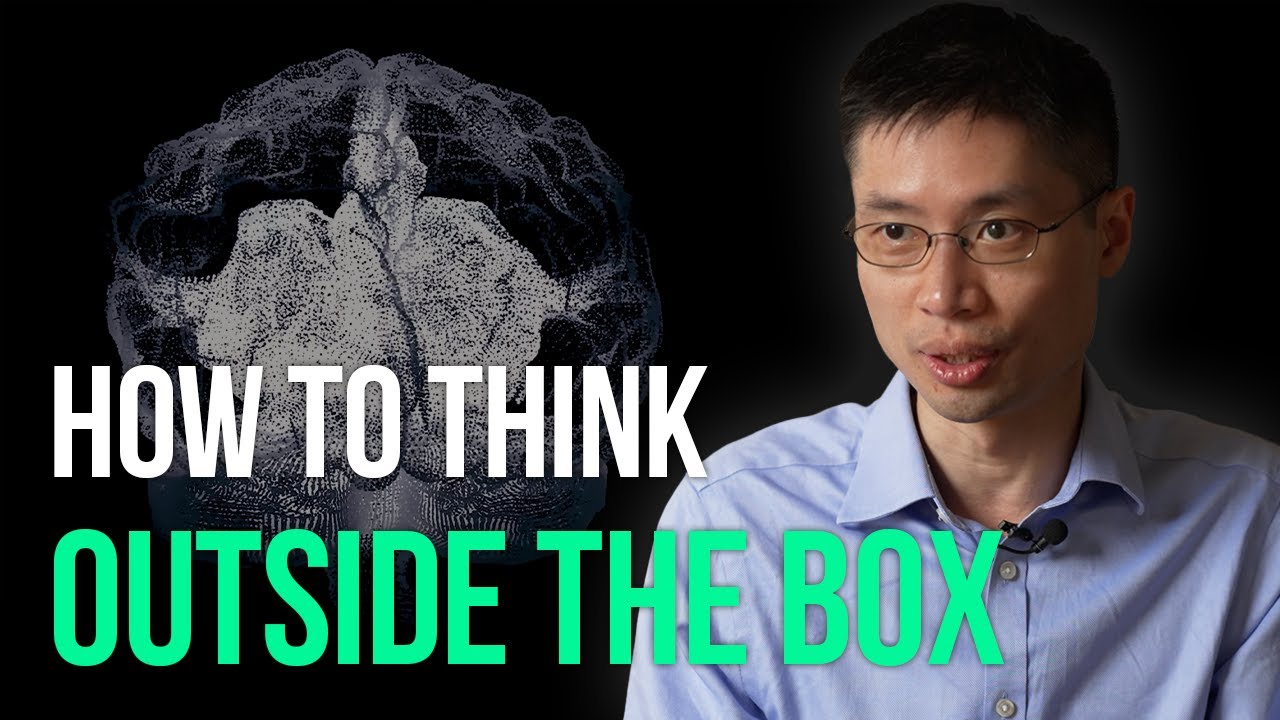
People used to go to school to learn how to do the homework and do their exams.
以前人們上學是為了學習如何做功課和應付考試。
00:05
Today, everyone needs to learn how to grade the homework.
今天,每個人都需要學習如何批改功課。
00:09
This is the huge difference.
這就是巨大的差異。
00:11
Because someday, if you want to do anything in the world, the first thing you will do is you will ask Chi Chi PT.
因為總有一天,如果你想在世界上做任何事情,你會做的第一件事就是你會問 Chi Chi PT。
00:16
The role of a person in the world is going to be to solve problems.
一個人在世界上的角色將會是解決問題。
00:20
So that's why what the world needs now is a large-scale way for everyone to learn how to come up with their own way of thinking, not just how to do the problems.
I'm a math professor at Carnegie Mellon University.
我是卡內基美隆大學的數學教授。
00:36
I'm a social entrepreneur and I'm also the national coach of the U.S. International Math Olympiad team.
我是一名社會企業家,我也是美國國際數學奧林匹亞代表隊的國家教練。
00:45
If you have six matchsticks, how can you put them so that they make four triangles?
如果你有六根火柴,你要如何擺放它們才能形成四個三角形?
00:52
Four triangles where the side of the triangle is the same length as the matchstick.
四個三角形,每個三角形的邊長都與火柴的長度相同。
00:57
So if you have six of them, you might start putting three of them like this.
所以如果你有六根,你可能會先這樣擺放三根。
01:02
But then you only have three more.
但那樣你就只剩下三根了。
01:05
Now what?
現在怎麼辦?
01:06
Okay, it turns out that the answer is that you take the three matchsticks like this and then you use one more up here and you put it down like a pyramid.
好的,答案是,你這樣擺放三根火柴,然後你在上面再用一根,把它擺成金字塔形狀。
01:15
That's thinking outside the box, if you can call it that, because this is not just on a piece of paper anymore.
那就是跳脫框架思考,如果你可以這樣稱呼的話,因為這不再只是在紙上。
01:21
It's still six matchsticks or six toothpicks, but it's not what you were thinking of.
它仍然是六根火柴或六根牙籤,但這不是你原先所想的。
01:25
I've done lots of different kinds of teaching.
我做過很多不同種類的教學。
01:27
I teach people all the way from the International Math Olympiad team.
我教導的對象從國際數學奧林匹亞代表隊的成員開始。
01:31
I will also go to schools and teach sixth grade in schools where unfortunately there might not even be any math teacher for the whole seventh grade.
我也會去學校教書,在那些不幸的學校裡,可能連整個七年級都沒有數學老師。
01:39
So I go and cover the entire range of education.
所以我會涵蓋整個教育領域。
01:42
I find this to be very interesting because that helps me to learn what the challenges are.
我覺得這很有趣,因為這能幫助我了解挑戰是什麼。
01:47
The whole point of a school math test is to see whether or not you listened and you practiced.
學校數學考試的重點是看你是否聽講並練習了。
01:51
In fact, all the math competition problems in the U.S. and also in many parts of the world are of this type, which is why today the way that I approach education and training is to try to help as many people as possible learn how to do those questions, which they
But I want to emphasize the reason I've been doing a lot of work on this nowadays is because when I was doing math competitions in the 1980s, the way you got good at it was by thinking every problem, which was new, was a chance to practice mental flexibility.
Today, unfortunately, there's a huge industry around test preparation and cramming where people try to help students get high scores on these strange math questions by showing you all of the strange math questions that you might possibly see and that involves studying
So that the hope of the parents is that when the students see the test questions, they are never surprised that they have done everything many, many, many times.
By the way, as you may know, this causes students to have to go to school and after school and so many hours.
順帶一提,你可能知道,這會導致學生必須花費許多時間在學校和課後。
03:01
It's actually very bad for the student.
這對學生來說其實非常不好。
03:02
But even worse, it takes away the students' chance to invent.
但更糟的是,這剝奪了學生發明的機會。
03:10
Money doesn't buy you happiness.
金錢買不到快樂。
03:12
But money is important for impact and influence.
但金錢對於影響力和聲望很重要。
03:15
So in fact, it's very important that the things that we build are capable of generating enough money to create the impact.
所以事實上,我們所建立的事物能夠產生足夠的金錢來創造影響力,這點非常重要。
03:21
This just happens to be what drives me.
這恰好是我追求的動力。
03:24
Ten years ago, I had this crazy idea that maybe if we made a website that would collect people's ways of explaining math and science topics, then maybe people would explain the math and science topics and it would be free and everyone would be able to learn math and science.
And I remember thinking, oh, that can't be very hard, we'll be done with that in a few months.
我還記得當時想,哦,這應該不難,幾個月就能完成。
03:44
I'm glad I thought that because I'm still working.
我很高興我當時是這麼想的,因為我還在繼續工作。
03:46
So I had this whole thing called XP.
所以我曾經有個叫做 XP 的構想。
03:48
We were making a website with free explanations, but that didn't actually have a business model of its own.
我們當時要做一個提供免費講解的網站,但那本身並沒有商業模式。
03:53
It wasn't generating money.
它沒有產生收入。
03:54
So I had to find some way to support all of that.
所以我必須找到某種方式來支撐這一切。
03:56
In 2019, in April, we started creating our own version of that in the United States of America where we took charge of filming me teaching and then we had a product which consisted of me teaching math that people could watch recordings of and they would pay for it.
But then this one, we still found our opinion points.
但即便如此,我們仍然發現了一些痛點。
04:16
And finally, about two years ago, I realized, you know what?
最後,大約兩年前,我意識到,妳知道嗎?
04:20
What people really want is to have a live human experience with somebody else who's an expert.
人們真正想要的,是與身為專家的其他人進行一場即時的真人互動體驗。
04:28
The only problem is that's quite rare and hard to find.
唯一的問題是,這種機會相當稀有且難以尋找。
04:30
And there's also another challenge, which is that ideally that person you're talking to is friendly.
此外還有另一個挑戰,那就是理想情況下,與你對談的那個人必須是友善的。
04:34
If the person knows a lot but is not friendly, that's actually not useful either, right?
如果那個人知識淵博但不友善,那其實也沒用,對吧?
04:38
This is the hardest thing to deliver in education because it's the least scalable.
這是教育中最難實現的部分,因為它的可擴展性最低。
04:42
Of course, in entrepreneurship world, we always think about scalability.
當然,在創業領域,我們總是思考可擴展性。
04:45
And yes, you can find one brilliant coach who teaches 10 students or maybe even 20 or maybe even even 100, that's a small scale compared to the size of the world.
And then that's when I suddenly realized I can make a giant win-win-win situation.
正是在那時,我突然意識到,我可以創造一個巨大的三贏局面。
04:59
So the main thing that I do now is an ecosystem.
所以我現在主要做的事情是一個生態系統。
05:02
It's actually an ecosystem that I invented, which unites many different types of people to all contribute in ways where everyone is winning.
這其實是我發明的一個生態系統,它結合了許多不同類型的人,讓大家都能做出貢獻,並在其中實現共贏。
05:11
One pain point, which was for the people learning that.
第一個痛點,是針對正在學習的人。
05:13
Then the second pain point was from the people who are very, very strong at math already, from which building the EQ would be even better.
第二個痛點,則是針對那些數學能力已經非常強的人,對他們來說,培養 EQ(情緒智商)會讓表現更好。
05:20
Although I do want to emphasize this is helping them finish up to become extraordinary.
雖然我確實想強調,這能幫助他們脫穎而出,變得非常出色。
05:25
And the thing that made me realize, the key that made me realize I could put everything together was an experience that I had about five, six years ago, which is that I also took improvisational comedy classes myself.
Improvisational comedy classes are acting classes.
即興喜劇課程其實就是表演課。
05:38
And I was doing that because I was trying to learn how to communicate better to get more people interested in math.
我去上課是因為當時我想學習如何更好地溝通,以吸引更多人對數學產生興趣。
05:43
But I realized that even a math nerd like me can take those classes and then become able to talk to a few more people.
但我發現,即使像我這樣的數學書呆子也能上這些課,然後變得能跟更多人交流。
05:49
So then I realized, let me add that.
所以當時我就想,讓我加上這項服務吧。
05:51
And then I walked over to our drama department and I found out that actually there are lots of people who have extraordinary drama skills who are actually indeed very interested in paid part time jobs to help to coach the high school students.
The third pain point is there are people who absolutely love what they're passionate about what they're doing in the acting and drama world.
第三個痛點是,有些人非常熱愛他們在表演和戲劇領域所做的事情。
06:12
But there's a practical need, which is well, how to find a stable part time job flexible hours that they can use to support their passions.
但他們有一個現實需求,那就是如何找到一份工時彈性、能穩定擔任兼職的工作,來支持他們的熱情。
06:20
So suddenly win, win, win.
所以突然間,三贏的局面出現了。
06:21
We have all three lined up and that's why this thing scales.
我們把這三者都串連起來了,這就是為什麼這件事能擴大規模。
06:25
Actually, everyone winning is very important because I work with high school students.
實際上,讓所有人都獲勝非常重要,因為我是和高中生合作。
06:28
And so in our company, anytime anyone wants to ask high school students to do anything, my answer to my employees is always that thing you want to ask that high schooler to do.
所以在我們公司,每當有人想請高中生做任何事時,我對員工的回答總是:你想請那位高中生做的事。
06:38
Can we explain to their parent why for a very busy high school student that thing is the best thing they can do with their time?
我們能向他們的父母解釋,為什麼對於一個課業繁忙的高中生來說,這件事是他們利用時間能做的最佳選擇嗎?
06:45
If I cannot explain that, they're not doing it.
如果我無法解釋清楚,他們就不會做。
06:47
So this is the discipline that we run it to.
這就是我們運營時的準則。
06:49
This is how strongly we make it a win-win situation.
這就是我們堅持創造雙贏局面的決心。
06:52
We will never have a high school student doing something unless I could explain myself to their parent.
除非我能向他們的父母解釋清楚,否則我們絕不會讓高中生做任何事。
06:57
We suggested for your daughter to do this because it's really good for her to do this.
我們建議令千金做這件事,是因為這對她真的很有幫助。
07:01
The thing is, beforehand, it was hard to imagine there would be a way to do that until the answer became, oh yeah, because while doing this, they would get to learn from a broad way or Hollywood quality actor or actress that's going to help them become extraordinarily successful.
But you see, this took eight years to come up with two more years to scale.
但你看,這花了八年時間才想出來,又花了兩年時間才擴大規模。
07:19
The speed at which we grow is purely just based on how long it takes for people who have middle school children to realize that, oh, there are these classes here where the class looks as good as a Twitch gaming stream and is taught by math geniuses who are smiling.
You know, these are things that people could not imagine that you've put all together at the same time.
你知道,這些都是人們以前無法想像,而你卻將它們全部整合在一起的事物。
07:37
And as people discover this, they actually switch over, they start joining our classes, then we can bring more high school students, and the scaling power this can go to is we, I estimate that this easily could grow to 100,000 high school students in the US.
That's 1% of the US high school students teaching about a million middle school students.
那是美國高中生總數的百分之一,他們將教導大約一百萬名中學生。
07:53
If you look at our live program, it looks a little strange because you'll see that the only subjects that we teach is a pretty small number, algebra, geometry, combinatorics, number theory.
We cover these because these are a curriculum that teaches you how to think.
我們涵蓋這些是因為這些課程能教你如何思考。
08:10
The only way to do that is by giving them questions that they have never seen in school before.
做到這一點的唯一方法是給他們一些他們以前從未在學校見過的問題。
08:15
So I need to find a source of problems that you will not see in school.
所以我需要找到一個你在學校看不到的問題來源。
08:19
Actually, that turns out to be the middle school math competition curriculum because the people making those problems were trying to make problems that you don't see in school.
事實上,那結果就是中學數學競賽課程,因為那些出題的人試圖出一些你在學校看不到的問題。
08:28
But the difference between the way we do it and the way that lots of the training centers do it is that we are trying to use those as opportunities to make you able to practice the thinking instead of just showing you doing the question that way enough time.
If we look at any good software engineer, most good software engineers, if they are given a task that they have never done before, the first thing they do is to think about some similar problems and search on Stack Overflow to see examples.
They don't expect that we'll give them the whole code they need to write, but they use this to research what kinds of technologies might be useful.
他們並不期望我們會給他們寫程式碼的全部內容,但他們會利用這些來研究哪些技術可能有用。
09:41
But as chat GPT suggests the solutions, they need to be quick thinkers and analytical thinkers to understand whether or not what chat GPT said is correct.
So that's why what the world needs now is a large-scale way for everyone to learn how to grade homework, for everyone to learn how to come up with their own way of thinking.
My general philosophy is when you're learning, you should keep challenging and you should not be repeating.
我的總體理念是,在學習時,你應該不斷挑戰自己,而不應該重複。
10:07
In the real world when you're doing a task, if it's repetitive, you should get chat GPT to do it or a calculator to do it or a computer to do it.
在現實世界中,當你執行一項任務時,如果它是重複性的,你應該讓 ChatGPT、計算機或電腦來完成。
10:15
But in order to know how to control those well in the real world, you need to learn how to think.
但為了知道如何在現實世界中有效地控制這些工具,你需要學會如何思考。
10:20
And that's the purpose of the learning process.
這就是學習過程的目的。
10:23
What I do for fun is I like to meet and try to understand people whose backgrounds I don't fully understand yet.
我做為樂趣的事情是,我喜歡認識並試圖理解那些我還不完全了解背景的人。
10:31
This is actually what I do for fun.
這實際上是我做為樂趣的事情。
10:33
This is also why we're talking right now, I happen to be talking to you in New York City.
這也是我們現在談話的原因,我碰巧在紐約市與你交談。
10:37
The way I got here overnight is I took the bus.
我連夜抵達這裡的方式是搭巴士。
10:40
The overnight bus.
搭夜間巴士。
10:41
You know, some people don't take the overnight bus because who knows who you're taking the bus with.
你知道,有些人不搭夜間巴士,因為誰知道你會和誰一起搭車。
10:46
But for me, I'm actually not scared by that.
但對我來說,我其實並不害怕。
10:48
That's just called the real world.
那就叫做現實世界。
10:49
You can't understand the real world unless you actually start going into various parts of the real world.
除非你真正開始進入現實世界的各個角落,否則你無法理解現實世界。
10:54
I think my message of how to create value is you cannot create value if you don't interact with people.
我認為我創造價值的訊息是,如果你不與人互動,你就無法創造價值。
11:01
You cannot just theoretically think about the value.
你不能只在理論上思考價值。
11:03
And the more people, the more you can understand people of different backgrounds, understand means have some idea of how they tick, what are their needs, what are the limiting factors, what do they want to do.
The better you are at modelling this, the more effective you will be at coming up with a solution.
你對此的建模能力越強,提出解決方案的效率就越高。
11:18
I started going to city after city after city, giving math talks in public parks.
我開始一座接一座地城市,在公園裡舉辦數學演講。
11:23
I actually set a schedule.
我其實還制定了行程表。
11:25
I put a schedule on my website and I said, I'm going to go to all these cities and people could just sign up to show up for the talks.
我把行程表放在網站上,並宣告我將走遍這些城市,人們可以報名參加演講。
11:31
And at the beginning, people were wondering, will anyone show up?
一開始,大家都在想,會有人來嗎?
11:33
But actually, there would be like 50 to 100 people showing up at these talks in parks.
但實際上,每場公園演講都有大約 50 到 100 人出席。
11:37
And by the way, that was a fun journey because in order to do that, I was travelling from park to park with all the AV equipment speakers and everything to be able to have a stage in park shelters all around the US.
But while doing that, inadvertently, that was customer discovery.
但在這樣做的過程中,我不知不覺地進行了客戶探訪。
11:54
Because I was able to suddenly interact with and talk to thousands of parents and students, which started to make me realise what kind of challenges people had.
因為我突然能與成千上萬的家長和學生互動交談,這讓我開始意識到人們面臨什麼樣的挑戰。
12:05
And that's why just probably about one to two months after that, the big idea came.
這也是為什麼大約在一兩個月後,那個大點子就出現了。
12:10
The big idea of, oh, we can actually have all these middle school students who I've met.
這個大點子就是,哦,我們其實可以讓所有我遇到的這些中學生。
12:15
They can all learn how to think, all at the same time, well, these people who are brilliant become extremely polished so that some day later in their careers, they can be really successful.
他們都能同時學會如何思考,讓這些天資聰穎的人變得極其出色,以便在未來的職業生涯中取得真正的成功。
12:27
So that was the idea, it was like somehow you cannot really find pain points if you're not seeing people.
所以這就是我的想法,因為如果你沒親自接觸人群,你根本無法真正找到痛點。
12:34
That's also why with a lot of the work that I do, I will go into schools, right?
這也是為什麼在我做的很多工作中,我都會走進學校,對吧?
12:38
I love to work on education and I do to somebody who is involved with a large network of schools.
我熱衷於教育工作,我也確實與一個龐大的學校網絡有合作。
12:46
And their schools, I believe, serve students who are also disadvantaged.
我相信他們的學校服務的也是弱勢學生。
12:51
Now, instead of just putting money or putting resources from my side, what I said is, I'm very interested.
現在,與其只是從我這邊出錢或提供資源,我是說,我非常有興趣。
12:57
Can we arrange for me to go into some of your schools and teach sixth grade?
我們能不能安排我去你們的一些學校教六年級?
13:01
What I'm explaining is that with the way I do anything, if I want to work in a sector, I go and myself step in and start doing the work and see what happens.
And this is actually how I came up with all these ideas, because actually the ideas that I'm doing are all things I've personally experienced myself.
這其實就是我如何想出所有這些點子的過程,因為我正在做的這些想法,其實都是我自己親身經歷過的。
13:16
I've experienced being a math person taking acting classes.
我經歷過一個數學人去上表演課。
13:20
I've experienced being a person learning how to think taught by somebody who knows a lot of things and also smiles.
我也經歷過由一個學識淵博且面帶微笑的人,教我如何思考。
13:26
So all the different parts gave me these ideas.
所以,這些不同的部分給了我這些靈感。
13:30
Now I can understand why you are I did by you as a social artist.
現在我能理解為什麼你會把我視為一位社會藝術家。
13:36
Yeah, we're not doing a very good job of maximizing lifetime customer value.
是的,我們在最大化客戶終身價值方面做得不太好。
13:41
If our goal is to solve the customer's problem as fast as possible.
如果我們的目標是盡快解決客戶的問題。
13:45
But this is what we want to do, right?
但這正是我們想做的,對吧?
13:46
This is the social entrepreneurship.
這就是社會企業精神。
13:48
This is also why if you ask me, what is my definition of success?
這也是為什麼如果你問我,我對成功的定義是什麼?
13:51
My definition of success is not just that we make a ton of money.
我對成功的定義不僅僅是我們賺了很多錢。
13:54
My definition of success is if we manage to convince a huge number of people on this earth to enjoy being thoughtful, then I want.
我對成功的定義是,如果我們設法說服地球上的一大群人去享受深思熟慮的樂趣,那麼我就成功了。
14:02
I love the fact that entrepreneurship is about creating new things.
我熱愛創業是關於創造新事物這件事。
14:07
So the message that I've been sending in my entire tour is that this new world of AI is going to be a wild west.
所以我在整個巡迴演講中傳達的訊息是,這個AI新世界將會是一片蠻荒之地。
14:14
There will be lots and lots of new opportunities.
將會有非常多的新機會。
14:16
The people who will be the most successful are the ones who are very good at creating value.
最成功的人將會是那些非常善於創造價值的人。
14:21
Actually in my public talks, I tell everyone, everyone should be a bit of an entrepreneur.
其實在我的公開演講中,我告訴每一個人,每個人都應該具備一點創業家精神。
14:26
They can be an entrepreneur or they can even be an entrepreneur, which is a word in English that we sometimes use to describe making new things within an organization.
But the whole concept of creating value is actually going to be central in helping the society survive and everyone flourish as we go forward into this age of AI into this new world of best.
1根據 Po-ShenLoh 的觀點,現代人最需要學習的技能是什麼?According to Po-Shen Loh, what is the most important skill for modern people to learn?根據 Po-ShenLoh 的觀點,現代人最需要學習的技能是什麼?
According to Po-Shen Loh, what is the most important skill for modern people to learn?
2影片中提到的火柴棒謎題,目的是說明什麼概念?What concept does the matchstick puzzle illustrate?影片中提到的火柴棒謎題,目的是說明什麼概念?
What concept does the matchstick puzzle illustrate?
✅ 正確!❌ 錯誤,正確答案是 B
Thematchstickpuzzlesolution (makinga 3D pyramid) illustratesthinkingoutsidethebox.
火柴棒謎題的解法(立體金字塔)說明了跳脫框架思考的重要性。
3Po-ShenLoh 批評現行的補習產業(Testpreparation)帶來了什麼負面影響?What negative impact does Po-Shen Loh criticize about the test preparation industry?Po-ShenLoh 批評現行的補習產業(Testpreparation)帶來了什麼負面影響?
What negative impact does Po-Shen Loh criticize about the test preparation industry?
7在 AI 時代,優秀的軟體工程師接到新任務時的第一反應是什麼?In the AI era, what is the first reaction of a good software engineer when given a new task?在 AI 時代,優秀的軟體工程師接到新任務時的第一反應是什麼?
In the AI era, what is the first reaction of a good software engineer when given a new task?
8Po-ShenLoh 認為,在現實世界中,重複性的任務應該如何處理?How should repetitive tasks be handled in the real world according to Po-Shen Loh?Po-ShenLoh 認為,在現實世界中,重複性的任務應該如何處理?
How should repetitive tasks be handled in the real world according to Po-Shen Loh?